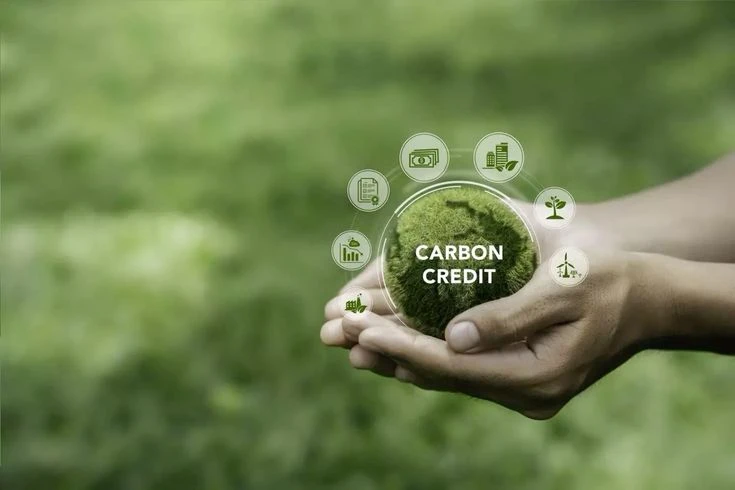
Climate change has introduced a wave of new terminology into the business world, and carbon credit is one of the most talked-about. So what exactly is a carbon credit, and why does it matter so much?
In simple terms, a carbon credit is a key instrument that links business activity to greenhouse gas (GHG) emission reduction targets. Through this mechanism, companies are encouraged to measure, reduce, and take responsibility for the carbon footprint generated by their operations.
What Is a Carbon Credit?
A carbon credit is a unit that represents the reduction or removal of one metric ton of carbon dioxide (CO2), or its equivalent in other greenhouse gases. One carbon credit unit is generally equal to one ton of CO2e (CO2 equivalent) that has been reduced, avoided, or removed from the atmosphere through a specific project or activity, such as reforestation, forest conservation, or the use of renewable energy.
The main purpose of carbon credits is to create an economic incentive for parties that successfully cut their emissions, while giving those with higher emissions an option to offset their environmental impact by purchasing carbon units. In this way, climate mitigation becomes not only a moral obligation but also a measurable economic value.
Carbon credits are commonly used by the following parties:
- Energy and manufacturing companies whose emissions are regulated by government policy (compliance market)
- Multinational corporations that have made voluntary commitments to net-zero emission targets
- Environmental project developers, such as those running forestry, renewable energy, or waste management projects, who generate carbon units for sale
- Investors and financial institutions that view the carbon market as a green investment instrument
How Does a Carbon Credit Work?
Broadly speaking, the process of generating a carbon credit involves four interconnected main steps, as follows.
- Emission Measurement — The first stage begins with calculating a baseline emission level, i.e., the amount of emissions produced before any intervention. This calculation serves as a reference point for determining the potential emission reduction of a given project or activity.
- Emission Reduction — Concrete action is then taken to lower emissions, for example through energy efficiency, forest conservation, or a shift to renewable energy sources such as Solar Power Plants (PLTS).
- Verification — Emission reductions cannot simply be claimed outright. An independent validation and verification process by a third-party Validation/Verification Body (VVB) is required to ensure that the calculation methodology is accurate and meets the applicable standards.
- Carbon Credit Trading — Once carbon units are issued and registered in a national registry system to prevent double counting, they can be bought and sold on carbon exchanges, such as the Indonesia Carbon Exchange (IDXCarbon), or through international trading schemes.
Types of Carbon Credit
In general, carbon credits are traded through two main mechanisms: the compliance market and the voluntary market.
Compliance Market
This market is mandatory and governed by government regulation. Companies in certain sectors, such as power generation, are assigned a specific emissions cap. If a company’s emissions fall below that cap, the surplus quota can be sold to another company whose emissions exceed its own cap, through a cap-and-trade scheme.
Voluntary Market
Unlike the compliance market, the voluntary market is not mandated by regulation. Companies participate on their own initiative to support sustainability targets or their Environmental, Social, and Governance (ESG) commitments — for instance, by purchasing carbon credits from reforestation or clean energy projects.
Key Differences
The fundamental difference lies in the nature of the obligation. The compliance market is legally binding and closely supervised by regulators, while the voluntary market is optional and more flexible — although it still requires credible verification for the resulting carbon units to be widely recognized.
Development of Carbon Credit in Indonesia
As a country with substantial tropical forest resources and renewable energy potential, Indonesia holds significant opportunities in the global carbon market, both in the forestry and energy sectors.
Carbon Market Potential in Indonesia
The Indonesia Carbon Exchange (IDXCarbon) was officially launched on 26 September 2023 under the supervision of the Financial Services Authority (OJK). Since then, business participation has continued to grow. As of mid-2026, more than 135 companies have registered as users of the carbon exchange.
Regulations and Recent Developments
The government continues to strengthen the national carbon market regulatory framework. One of the most recent developments is the issuance of Minister of Forestry Regulation (Permenhut) No. 6 of 2026, which governs the mechanisms, participants, and types of carbon units in support of Indonesia’s Nationally Determined Contribution (NDC) target — covering everything from planning, validation, and verification to the issuance and transaction of carbon units.
Opportunities for Businesses
These regulatory developments open up major opportunities for companies across various sectors, particularly those with clean energy initiatives. Companies that adopt renewable energy not only help lower their own operational emissions, but may also generate economically valuable carbon units while strengthening their sustainability reputation among investors and business partners.
Carbon Credit’s Connection to Solar Panels
One of the most concrete and immediately actionable steps a company can take to participate in the carbon credit ecosystem is switching to renewable energy — particularly Solar Power Plants (PLTS).
Solar Panels Help Reduce Carbon Emissions
Every kWh of electricity generated by solar panels replaces electricity from fossil fuel sources, which in turn helps reduce CO2 emissions produced.
Supporting Corporate ESG and Sustainability Targets
For companies committed to ESG principles, the use of PLTS serves as concrete evidence of efforts to reduce their carbon footprint.
The Role of PLTS in the Energy Transition
On a broader scale, PLTS plays a strategic role in supporting the national energy transition toward a low-carbon economy. As more companies shift to solar energy, their collective contribution to achieving Indonesia’s NDC target and fostering a healthy carbon market grows accordingly.
Conclusion
In summary, a carbon credit is an instrument that measures, verifies, and assigns economic value to emission reduction efforts, whether through the compliance market or the voluntary market. In Indonesia, the ongoing development of carbon market regulations and infrastructure such as IDXCarbon continues to show a positive trend, opening up opportunities for businesses to actively participate in this ecosystem.
Curious how installing PLTS can help your company reduce carbon emissions while supporting your ESG targets? Consult your business’s solar energy needs with ATW Solar today.
Carbon Credit FAQ
Can carbon credits be bought and sold?
Yes. Once carbon units have passed the validation and verification process, they can be traded — either through official exchanges such as the Indonesia Carbon Exchange (IDXCarbon) or through international trading mechanisms.
What are the benefits of carbon credits for companies?
Beyond contributing to the global reduction of emissions, carbon credits offer companies several concrete benefits, including: helping meet regulatory obligations (for sectors required to participate in the compliance market), supporting the achievement of ESG and net-zero emission targets, enhancing sustainability reputation among investors and consumers, and opening up new revenue potential for companies running emission-reduction projects.
Can every company participate in carbon trading?
In the compliance market, participation is generally mandatory only for companies in specific sectors subject to emissions-cap regulations, such as power generation. In the voluntary market, however, companies from nearly any sector can participate on a voluntary basis — either as buyers offsetting their emissions or as project developers generating carbon units for sale.
How can a company start reducing its carbon emissions?
The first step a company can take is calculating the baseline emissions of its operational activities, then identifying its largest emission sources. From there, the company can implement concrete measures such as energy efficiency, better waste management, and a shift to renewable energy sources like PLTS, the impact of which can be directly measured in terms of emission reduction.
Why are carbon credits important for ESG implementation?
Carbon credits are one of the instruments that demonstrate a company’s commitment to the Environmental pillar of ESG in a measurable and verifiable way. By participating in the carbon credit ecosystem — whether through direct emission reduction or the purchase of carbon units — a company can show genuine environmental responsibility rather than a commitment that exists only on paper, while also strengthening its position in its sustainability report.