

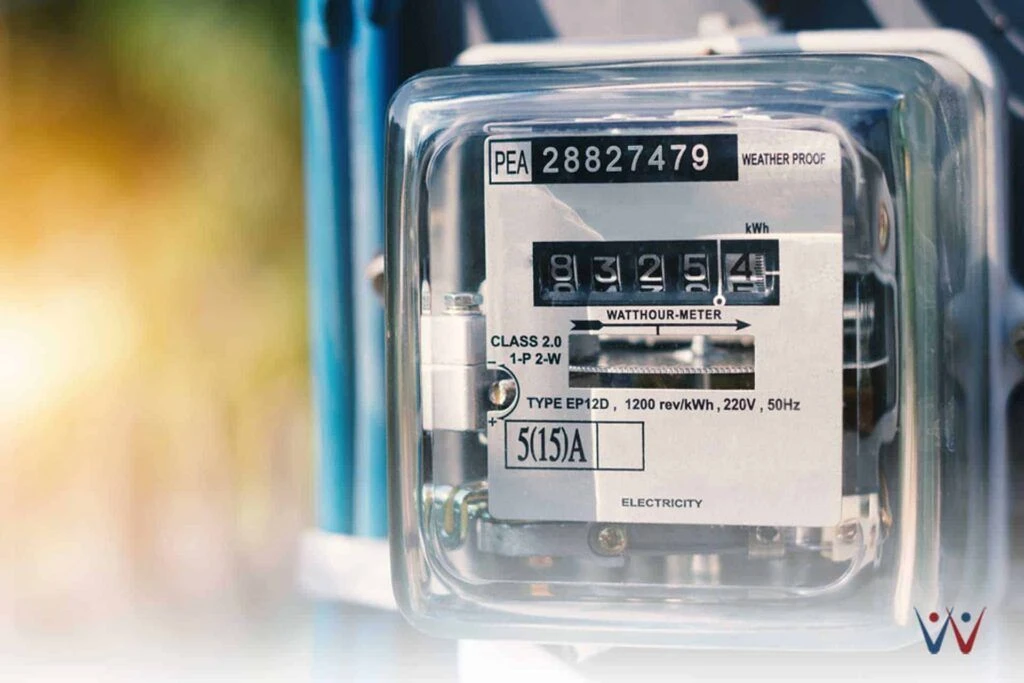
Many prospective users wonder whether solar panel installation automatically means they have to apply for an increase or decrease in the power of their home’s PLN meter.
The Relationship Between PLN Power and a Solar PV System
PLN power (for example 900 VA, 2,200 VA, or 5,500 VA) indicates the maximum power you may draw from the PLN grid at any one time. Meanwhile, the PV system capacity (in kWp) indicates how much electricity the solar panels can generate under optimal sunlight conditions. The two are different things: PLN power is the “supply limit from the grid”, while PV system capacity is “the generating capability of your own power plant”.
In practice, a solar PV system helps meet electricity needs by directly supplying part of the load, so the electricity drawn from PLN becomes smaller, especially during the day. Whether or not your PLN power needs to be adjusted depends largely on the total electrical load, the type of PV system, and the regulations that apply to the PLN grid in your area.
Does Solar Panel Installation Require Adding or Changing Power?
In general, solar panel installation does not automatically require a change in meter power. A power adjustment may be needed when the electrical loads running at the same time frequently exceed the installed PLN power, for example at night when the solar panels no longer produce electricity and the entire load is supported by PLN again, or when you plan to add high-power appliances such as air conditioners and pumps.
Conversely, if your existing PLN power already meets your daily needs, there is usually no need to change it. That is why calculating your energy needs before determining the system capacity is a very important step, so that the PV system capacity and PLN power can complement each other without wasted costs.
Factors to Consider
The following factors affect whether your PLN power needs to be adjusted:
- Total electricity consumption of the home or building, including peak load when many appliances are running at the same time.
- Solar panel and inverter capacity, which should be designed according to needs, not simply made as large as possible.
- Type of PV system used, whether on-grid, hybrid, or off-grid, as each has a different relationship with the PLN grid.
- Daytime and nighttime electricity usage patterns, since solar panels only produce power when there is sunlight.
- Applicable provisions and regulations, including rooftop solar rules and development quotas set by PLN.
Example PV Installation Scenarios
Homes with low PLN power and high electricity consumption. In this case, a PV system can help reduce the load on PLN during the day. However, if nighttime load remains high, adjusting your PLN power may still need to be considered, or you can add batteries to support nighttime needs.
Homes with sufficient PLN power. If your PLN power is already enough to support daily needs, a PV system can generally be installed without changing the meter power, with a focus on reducing electricity bills.
Buildings with large electricity needs. For office buildings, factories, or business facilities, PV system capacity is usually designed based on the load profile and available roof area, so the PLN power evaluation is carried out as part of a more comprehensive technical assessment.
Comparison of on-grid systems and battery systems. In an on-grid system, the PV system works alongside the PLN grid, so PLN power remains the main source when solar panel production drops. In a battery (hybrid) system, part of the nighttime demand can be supported by stored energy, so dependence on PLN power at those times can be reduced, depending on the installed battery capacity.
What to Prepare Before Installing a Solar PV System
To ensure your solar panel installation runs smoothly and delivers optimal results, prepare the following:
- Evaluate your electricity bills and consumption over the past few months to understand your usage pattern.
- Determine PV system capacity based on needs, not on estimates alone.
- Check your available electrical power capacity, including the condition of the electrical installation in your home or building.
- Make sure the installation and equipment meet standards, from panels, inverters, and cables to the protection system.
- Follow PLN provisions and applicable regulations, including the rooftop solar application process for grid-connected systems. Since the enactment of Minister of Energy and Mineral Resources (ESDM) Regulation No. 2 of 2024, the rooftop solar capacity limit is no longer automatically tied to 100% of connected power, but instead follows the set development quota, and electricity exported to the PLN grid is no longer compensated. Because regulations may change, be sure to check the latest policy before installing.
FAQ on PV Installation and PLN Power
Can a PV system be installed in a home with 900 VA PLN power?
Yes. Technically, installing a PV system does not require a specific PLN power. What matters is matching the system capacity to your electricity needs, as well as PLN provisions for grid-connected systems. Consult on your plan so the chosen capacity is not excessive for your household usage pattern.
Does the inverter capacity have to equal the PLN power?
Not necessarily. Inverter capacity is determined by the solar panel capacity and load requirements, while PLN power is the supply limit from the grid. The two need to be designed in an integrated way, but they do not have to be the same value.
Can installing a PV system cause the PLN power to drop or change automatically?
No. Installing a PV system does not automatically change the power registered on your PLN meter. A power change only happens if you formally apply for it with PLN.
Do PV system users still need electricity from PLN?
With on-grid and hybrid systems, PLN electricity is still needed, especially at night or when solar panel production is insufficient. Only off-grid systems are designed to operate without the PLN grid.
How do I determine the right PV system capacity for my home’s electrical power?
Start with your bill data and daily consumption patterns, then adjust for roof area, panel orientation, and your goal (lowering bills or backup power). The exact calculation is best done together with an experienced solar PV provider.
Conclusion
Solar panel installation does not always mean you have to change your PLN meter power. That decision should be based on your electricity consumption, PV system capacity, inverter, and chosen system configuration. Before installing a solar PV system, calculate your energy needs and make sure the system complies with applicable regulations.
Still unsure whether your home or business needs a power adjustment? The ATW Solar team is ready to help you, from consultation and energy needs calculation to designing a PV system that suits your conditions.