

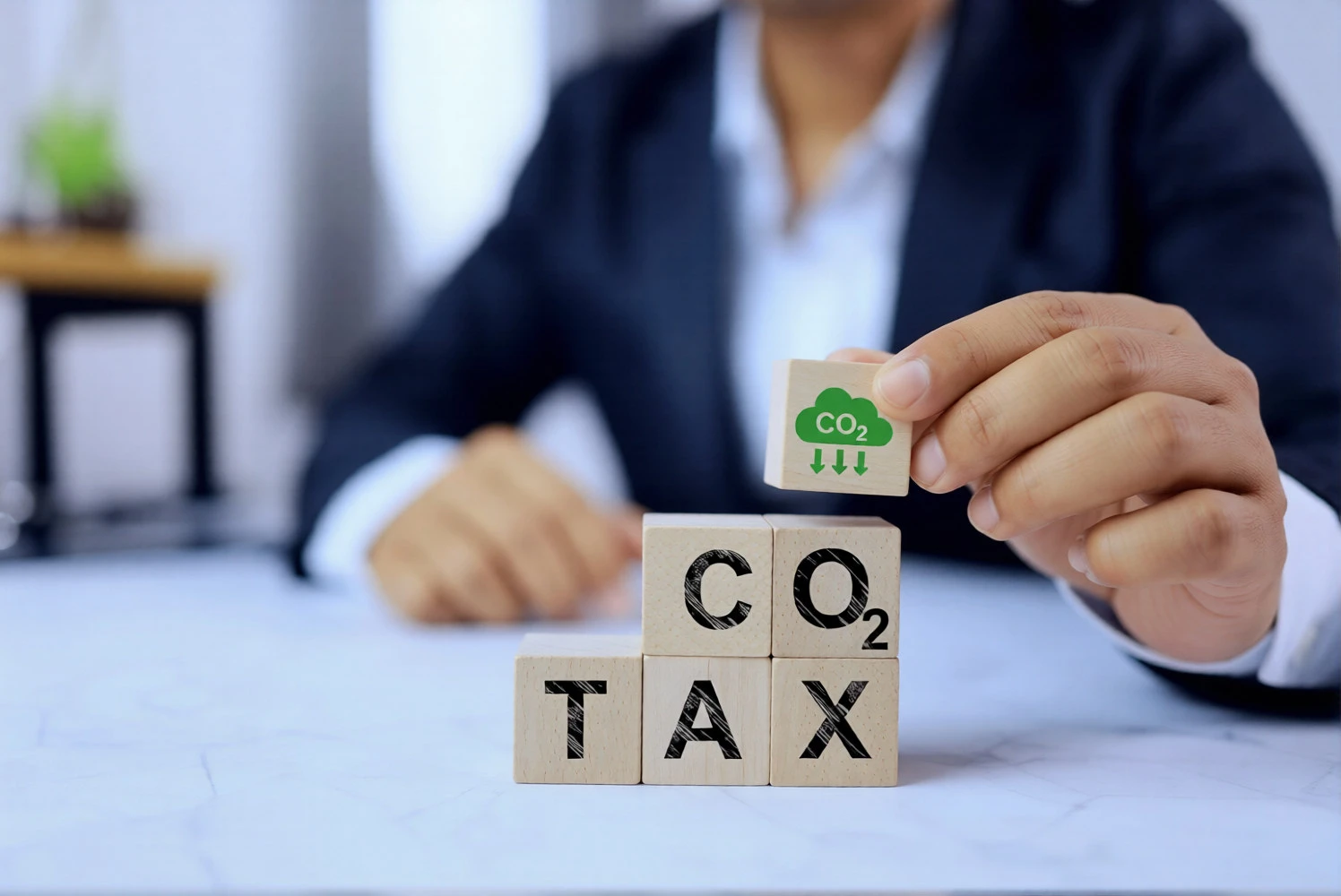
Climate change and increasing greenhouse gas emissions have made carbon taxes an increasingly discussed topic among the government, businesses, and various industrial sectors. This policy is one of the instruments used to encourage emission reductions while accelerating the transition toward a low-carbon economy.
For businesses, understanding the development of carbon taxation in Indonesia is becoming increasingly important. Changes in carbon policies can affect operational costs, energy-use strategies, and long-term investment planning.
What Is a Carbon Tax?
A carbon tax is a tax imposed on carbon emissions that have a negative impact on the environment. Under Law No. 7 of 2021 on the Harmonization of Tax Regulations (UU HPP), the tax may be imposed on the purchase of carbon-containing goods and/or activities that generate carbon emissions.
The main purpose of a carbon tax is to provide an economic signal to individuals and companies so they can take the emissions impact of their activities into consideration. By placing a cost on emissions, businesses are encouraged to improve energy efficiency, reduce their use of fossil fuels, and transition to lower-emission technologies.
It is important to distinguish a carbon tax from a carbon credit. A carbon tax is a levy imposed on certain emissions or activities, while a carbon credit is a unit representing emission reductions or removals that can be used in carbon trading mechanisms in accordance with applicable regulations.
How Does a Carbon Tax Work?
In general, a carbon tax is associated with activities that generate greenhouse gas emissions. The tax basis may be linked to the amount of carbon dioxide equivalent (CO2e) produced over a certain period.
The HPP Law sets the carbon tax rate at a minimum of IDR 30 per kilogram of CO2e or its equivalent unit, subject to certain provisions that take into account carbon market prices.
In its implementation, measurement, reporting, payment, and the designation of priority sectors must follow the roadmap and implementing regulations established by the government. Indonesia’s carbon tax is also connected to carbon trading, as both are part of instruments for controlling emissions and establishing the economic value of carbon.
Development of Carbon Tax in Indonesia
The development of the carbon tax in Indonesia began with its regulation through the HPP Law and the development of carbon trading mechanisms. The government previously prepared for a phased implementation, with the power generation sector being one of the initial sectors of focus.
As of 2026, Indonesia’s national carbon ecosystem continues to develop. In July 2026, the government launched the Carbon Unit Registry System (SRUK) to strengthen the recording, traceability, and governance of national carbon units. Carbon trading regulations through the carbon exchange were also updated through OJK Regulation (POJK) No. 10 of 2026.
These developments show that the carbon tax in Indonesia needs to be understood as part of broader changes in the country’s emission-control ecosystem.
Impact of Carbon Tax on Industry
For industries, a carbon tax has the potential to affect operational cost structures, particularly for companies with high energy consumption and emission levels. Companies need to start understanding the sources of emissions within their operations and identifying opportunities to reduce emissions.
On the other hand, a carbon tax can encourage improvements in energy efficiency. Companies that optimize energy use earlier and reduce their dependence on fossil-based energy sources are likely to be better prepared for developments in carbon policies. sumber energi berbasis fosil cenderung lebih siap menghadapi perkembangan kebijakan karbon.
The energy transition also creates opportunities for companies to support sustainability targets, improve operational efficiency, and strengthen their commitment to lower-carbon business practices.
The Role of Solar Panels in Addressing Carbon Tax
One step companies can consider as part of their emission-reduction strategy is the use of Solar Power Plants (PLTS). Solar panels can help reduce dependence on fossil-fuel-based electricity while supporting the use of renewable energy.
For businesses and industries, the use of solar PV systems can be part of an energy-efficiency strategy and help achieve sustainability targets. In the context of the development of the carbon tax in Indonesia, investing in clean energy can help companies prepare for lower-emission operational strategies.
ATW Solar provides solar PV solutions for commercial and industrial needs, from planning to implementation, with solar energy systems that can be tailored to a company’s specific requirements.
Conclusion
The carbon tax is becoming an important part of Indonesia’s evolving emission-control policies. Companies need to understand the development of the carbon tax in Indonesia and its potential impact on their operations and energy strategies.
With increasing attention to energy efficiency and emission reduction, the use of solar PV can be one strategic step toward more efficient, sustainable, and low-carbon operations.
FAQ
When will the carbon tax take effect in Indonesia?
The carbon tax has been regulated under the HPP Law, while its implementation and development are being carried out gradually in accordance with the government’s roadmap and policies.
Who is required to pay the carbon tax?
The subjects of the carbon tax may include individuals or entities that purchase carbon-containing goods and/or conduct activities that generate carbon emissions, in accordance with applicable regulations.
Does the carbon tax apply to all types of businesses?
Not all sectors and activities are subject to the tax simultaneously. The implementation of the carbon tax in Indonesia is being carried out gradually, taking into account priority sectors and the policy roadmap.
Can the carbon tax be reduced through the use of renewable energy?
The use of renewable energy, including solar PV, can be part of a company’s strategy to reduce emissions and improve energy efficiency.
How can companies prepare for carbon tax policies?
Companies can start by measuring their emission sources, improving energy efficiency, developing emission-reduction strategies, and considering the use of renewable energy such as solar PV.