

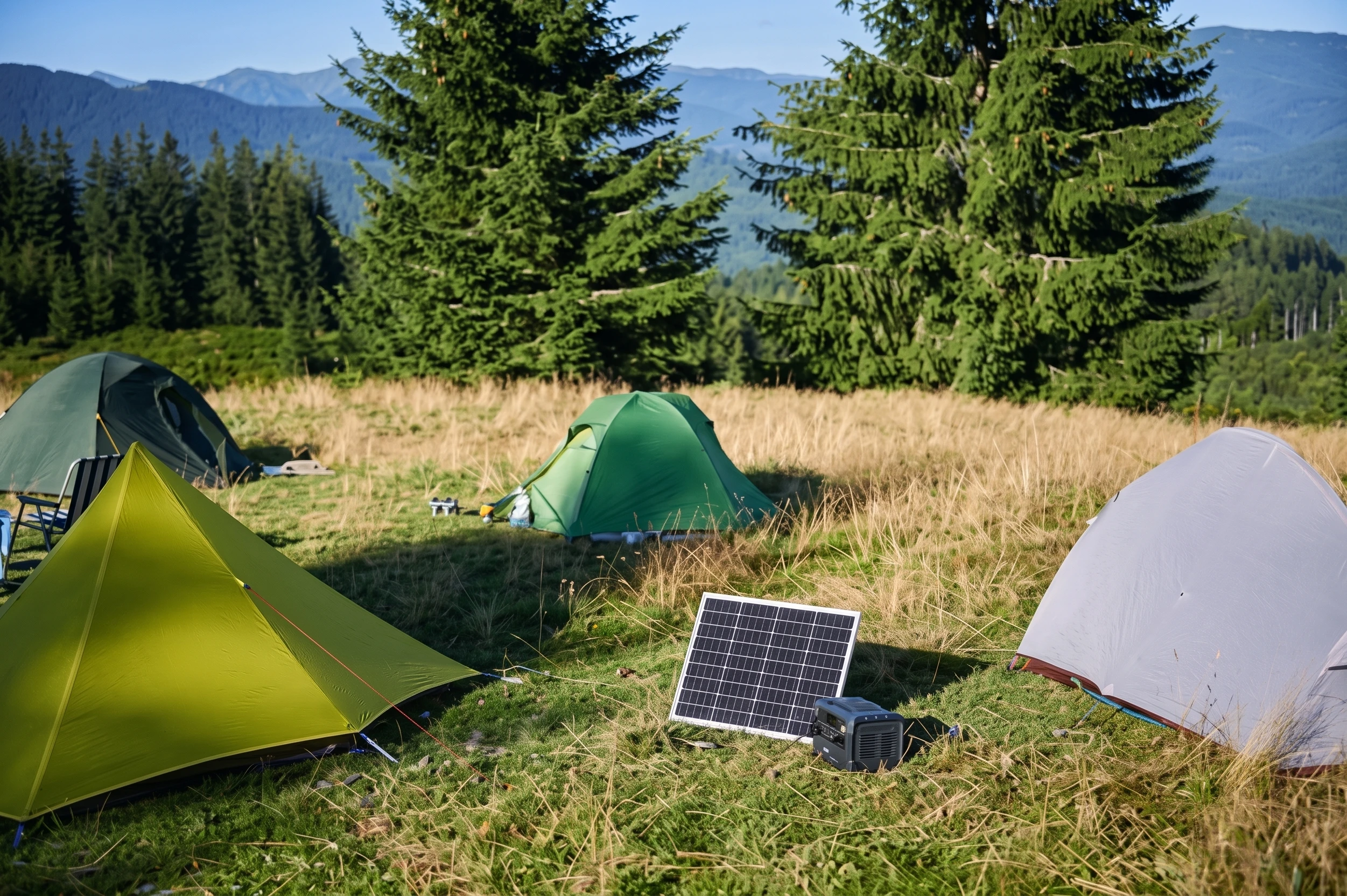
Electricity needs are not always located in areas with easy access to the power grid. When camping, working in the field, staying in remote locations, or facing emergency situations, a practical source of electricity can be essential. One solution that can be used is a portable solar panel or portable solar PV system.
By harnessing solar energy, a portable solar panel can help generate electricity for various small-scale needs. This system offers flexibility because it is easy to carry and move according to your needs, while also serving as an alternative energy source that does not require fossil fuels.
What Is a Portable Solar Panel?
A portable solar panel is a solar panel designed to be easily moved and used flexibly. Unlike rooftop solar PV systems, which are permanently installed on buildings, portable solar PV systems are generally more compact, lightweight, and can be temporarily installed in various locations.
A portable solar panel system can consist of foldable panels, panels with support frames, or devices connected to a power station. Users can position the panel toward sunlight to generate energy according to their needs.
Due to their flexible nature, portable solar panels are widely used for outdoor activities, travel, fieldwork, and emergency power needs.
How Does a Portable Solar Panel Work?
Basically, the way a portable solar panel works is similar to other solar power systems. Solar cells in the panel capture energy from sunlight and convert it into direct current (DC) electricity.
In systems equipped with a battery, electricity from the panel is then regulated by a charge controller before being stored. The charge controller regulates the battery charging process so that it operates safely and according to the system’s requirements. The battery or power station then stores the energy for use when needed.
If the device being powered requires alternating current (AC), an inverter converts the DC electricity into AC. Therefore, the general operating flow of a portable solar PV system is: solar panel → charge controller → battery → inverter → electronic device.
Components of a Portable Solar PV System
Several main components of a portable solar panel system include:
- Solar panel module to capture sunlight and generate DC electricity.
- Battery or power station to store energy.
- Charge controller to regulate the battery charging process.
- Inverter untuk mengubah listrik DC menjadi AC.
- Cables and connectors to connect each component.
- Safety devices according to the system design.
- Mounting or frame to position the panel toward the sun.
In some modern products, the charge controller, battery, inverter, and various power outputs can be integrated into a single power station.
Benefits of Using Portable Solar Panels
- Additional power source for outdoor activities
Portable solar panels can provide a practical source of electricity when camping, traveling, or participating in outdoor activities that require power. - Providing electricity in locations with limited access to the PLN grid
This system can be used in remote areas or locations that do not yet have access to electricity from the PLN grid. - As a backup power source during power outages
Portable solar PV systems can help provide power for essential devices during power outages. - Reducing dependence on fossil fuel-powered generators
By harnessing solar energy, portable solar panels can serve as an alternative for electricity needs that would normally rely on fuel-powered generators. - Practical for small-scale electricity needs
Their compact and portable design makes these systems suitable for charging low- to medium-power electronic devices.
Uses of Portable Solar PV Systems in Everyday Life
- Camping and outdoor activities
Portable solar PV systems can provide electricity while camping, hiking, or traveling to areas far from conventional power sources. - Charging electronic devices
These systems can be used to charge phones, cameras, laptops, power banks, and other communication devices. - Emergency home electricity needs
During a power outage, a portable solar PV system can be used to power lights or charge essential devices. - Supporting MSME activities or fieldwork
MSME owners and field workers can use portable solar PV systems as a power source for work equipment in locations without access to electricity. - Lighting in remote areas and temporary projects
Portable solar PV systems can provide temporary lighting at project sites, work areas, or remote locations.
How to Choose the Right Portable Solar Panel
- Match the panel capacity to the power requirements of your devices
Choose a panel capacity that can meet your devices’ energy requirements so that charging and electricity usage can operate optimally. - Consider the battery capacity and energy storage duration
The larger the battery capacity, the more energy can be stored for use when sunlight is unavailable. - Choose output types that are compatible with your devices
Make sure the system provides compatible output types, such as USB, DC, or AC, according to the devices you intend to use. - Consider size, weight, and portability
For outdoor use, choose a panel with a size and weight that are easy to carry and install in various locations. - Check material quality, safety features, and warranty
Make sure the product uses quality materials, provides protection against potential usage risks, and comes with a warranty for additional security and confidence.
Factors That Affect Performance
- Sunlight intensity
The more optimal the sunlight exposure received by the panel, the greater the potential electricity output. - Panel position and orientation
Positioning the panel optimally toward the direction of sunlight can help increase energy production. - Weather conditions and shading
Cloudy or rainy weather, or panels covered by shade, can reduce the amount of sunlight received and consequently affect electricity output. - Battery capacity and condition
Battery condition determines how much energy can be stored and reused by the portable solar panel system. - Number of devices used simultaneously
The more devices connected, the greater the power demand, so the system capacity must be adjusted accordingly. - Panel maintenance and surface cleanliness
Regularly cleaning the panel of dust and dirt helps keep its surface optimal for receiving sunlight.
Advantages and Limitations of Portable Solar PV Systems
The main advantages of portable solar PV systems are flexibility and portability. The system can be moved without requiring permanent installation like a rooftop solar PV system.
However, the capacity of portable solar panels is generally more limited than that of permanent solar PV systems. Energy production also depends on the availability of sunlight, while batteries have a limited storage capacity.
For residential needs with high electricity loads or for industrial applications, more comprehensive system planning and load calculations are required. In such situations, consulting a solar energy solution provider such as ATW Solar can help determine a system that suits the user’s needs.
FAQ
Can a Portable Solar Panel Be Used Without a Battery?
Yes, depending on the device and system configuration. However, a battery is required if you want to store energy for use when sunlight is unavailable.
How Long Does It Take to Charge a Battery Using a Portable Solar Panel?
The charging time depends on the panel capacity, battery capacity, sunlight intensity, and weather conditions.
Is a Portable Solar PV System Safe to Use Outdoors?
It is safe when used according to the product specifications. Make sure the cables, connectors, and electrical devices are properly protected in accordance with the manufacturer’s guidelines.
Can a Portable Solar Panel Be Used to Charge an Electric Vehicle?
In general, portable solar panels are more suitable for low-power devices. Charging an electric vehicle requires a much larger energy capacity and system.
Does a Portable Solar PV System Require Permits Like a Rooftop Solar PV System?
Because portable solar PV systems are generally not permanently installed and are used as standalone systems, their usage characteristics differ from rooftop solar PV installations. However, their use and installation should still comply with applicable safety standards.
Conclusion
Portable solar panels offer a practical, flexible, and easy-to-carry electricity solution for various needs. By choosing the appropriate portable solar panel capacity, battery, and supporting components, a portable solar PV system can be used as an additional energy source for outdoor activities, remote locations, and emergency electricity needs.
However, for high-capacity electricity needs and long-term use, a specially designed solar PV system remains a more suitable option.