

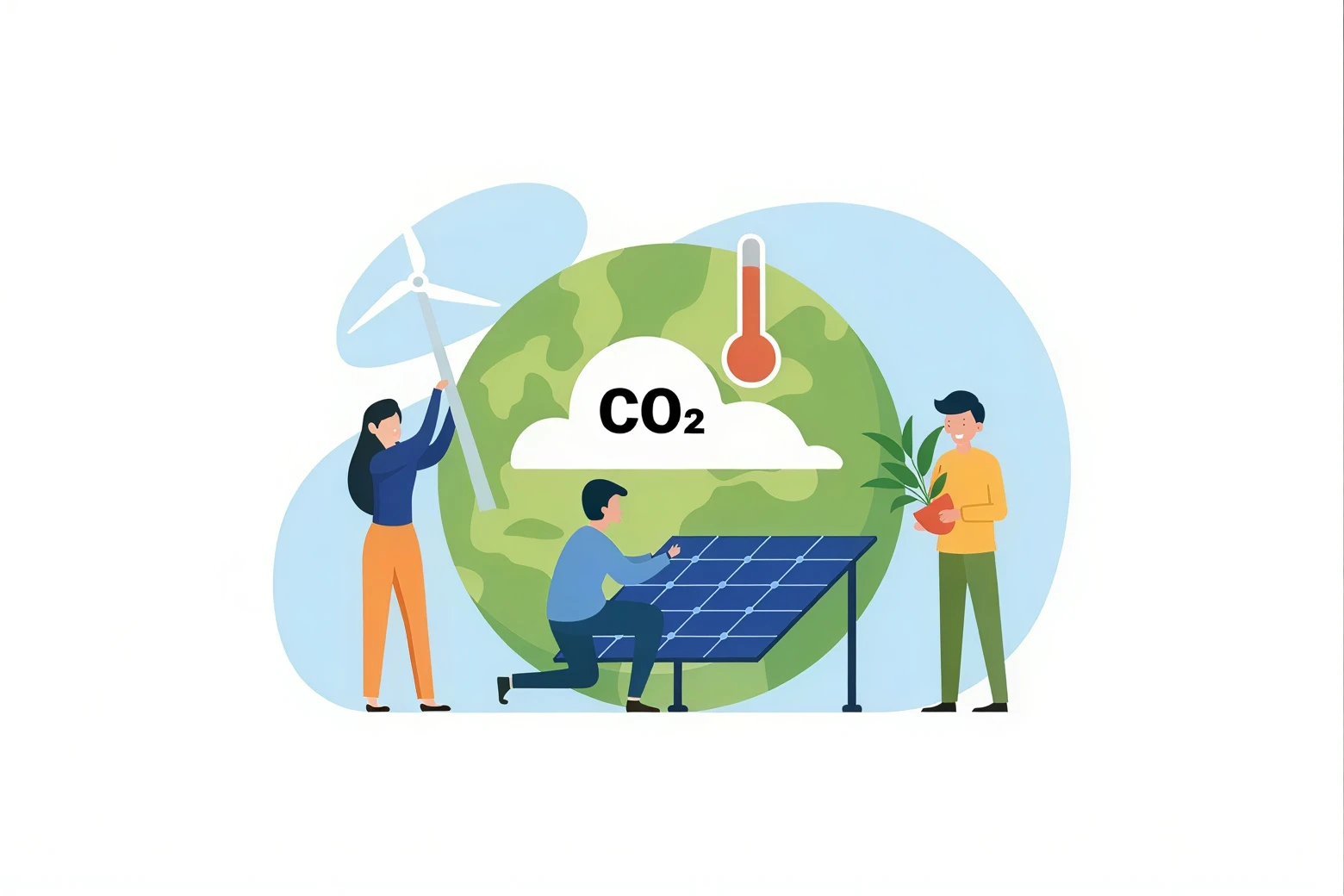
Climate change is encouraging companies to begin reducing the environmental impact of their operations. One approach receiving increasing attention is industrial decarbonization, which refers to efforts to reduce the carbon emissions and greenhouse gas emissions generated by industrial activities.
Industrial decarbonization has become a key focus because the industrial sector has high energy demands and still relies heavily on fossil fuel-based energy sources. In Indonesia, these efforts are also connected to the national commitment to achieve Net Zero Emissions (NZE) by 2060 or sooner. The government continues to promote energy efficiency and the use of clean energy as part of the transition toward a low-carbon economy.
What Is Industrial Decarbonization?
Industrial decarbonization is the process of reducing the carbon emission intensity of production activities and energy use. Its goal is not only to reduce emissions but also to build operational systems that are more efficient, sustainable, and prepared for changing market demands.
Industrial sector decarbonization can be implemented through various approaches, such as improving energy efficiency, electrifying processes, switching to renewable energy, and conducting regular emissions monitoring.
Energy-intensive sectors such as manufacturing, cement, steel, chemicals, pulp and paper, and mineral processing play an important role in this agenda. However, industrial decarbonization is not only relevant to heavy industries. The food and beverage, textile, and other manufacturing sectors also have opportunities to reduce emissions through technologies currently available.
Why Is Decarbonization Important?
1. Reducing Greenhouse Gas Emissions
Industrial decarbonization helps companies reduce greenhouse gas emissions resulting from energy use and operational activities. Through energy efficiency and the adoption of renewable energy, companies can gradually reduce their carbon footprint.
2. Supporting Corporate ESG Goals
Another reason why decarbonization is important is its connection to corporate ESG goals. Emissions reduction efforts can demonstrate a company’s commitment to sustainability while supporting its established environmental targets.
3. Improving Energy Efficiency
Industrial sector decarbonization strategies can help companies identify opportunities to reduce energy waste. In addition to lowering emissions, more efficient energy use can also help optimize operational costs.
4. Strengthening Business Competitiveness
As attention to sustainability continues to grow, companies need to adapt to changing market conditions and supply chain requirements. Implementing industrial decarbonization can help companies improve their long-term business readiness and competitiveness.
Industrial Sector Decarbonization Strategies
Industrial sector decarbonization strategies need to be tailored to the characteristics of each company. Some approaches that can be implemented include:
- Energy efficiency, through production process optimization, the use of more efficient equipment, and energy management systems.
- Electrification of industrial processes, particularly for low-temperature heat requirements that can be supported by electric technologies.
- The use of renewable energy, such as solar energy to support operational electricity needs.
- Emissions monitoring and management, enabling companies to establish baselines, set targets, and evaluate the results of their industrial decarbonization programs.
These approaches demonstrate that why decarbonization is important is not only related to reducing emissions but also to managing energy more strategically.
The Role of Solar Panels in Industrial Decarbonization
One solution that can support industrial decarbonization is the use of solar power systems. By generating electricity from solar energy, companies can reduce their dependence on fossil fuel-based energy sources and lower emissions associated with electricity consumption.
Installing a solar power system can also support more sustainable industrial operations, particularly for companies with significant electricity demand during the daytime. Within an industrial sector decarbonization strategy, solar energy can form part of a broader combination of solutions alongside energy efficiency and better electricity consumption management.
As an EPC provider for commercial and industrial solar power solutions, ATW Solar can help companies plan their solar power system requirements based on their operational characteristics and energy needs. With proper planning, the adoption of solar energy can become a practical step toward supporting a company’s industrial decarbonization targets.
Challenges in Implementing Industrial Decarbonization
Implementing industrial decarbonization still involves several challenges that companies need to consider. One of them is the upfront investment, particularly for adopting lower-emission technologies and infrastructure.
In addition, energy system planning needs to be carried out carefully to ensure that the strategies implemented align with the company’s operational requirements. Selecting the right technology is also an important factor, as each industry has different characteristics and energy needs.
Therefore, guidance from an experienced EPC provider such as ATW Solar can help companies plan and implement energy solutions that align with their requirements and decarbonization targets.
Industrial decarbonization is an important step toward more efficient and sustainable operations. The use of renewable energy, such as solar power systems, can be one strategy to support carbon emissions reduction while improving a company’s energy management.
Ultimately, why decarbonization is important is not only about environmental commitments but also about business readiness for the future. With proper planning, industrial sector decarbonization can help companies achieve economic benefits while supporting long-term sustainability.
FAQ
What is the difference between decarbonization and net zero emissions?
Decarbonization is the process of reducing carbon emissions from specific activities, while net zero emissions is a condition in which the emissions produced are balanced by emissions that are reduced or removed from the atmosphere.
How can a company measure the success of its decarbonization program?
Success can be measured through emissions reductions, lower emissions intensity per unit of production, improved energy efficiency, and progress toward renewable energy targets.
Is decarbonization only relevant to the manufacturing industry?
No. Decarbonization is also relevant to commercial sectors, mining, processing, logistics, and various other businesses that consume energy in their operations.
How long does it take to implement a decarbonization program in the industrial sector?
The timeline depends on the company’s scale, facility conditions, emissions reduction targets, and the technologies used. Implementation can be carried out gradually through both short-term and long-term strategies.
How can a company determine the most suitable decarbonization strategy?
Companies should begin by identifying their emission sources and energy consumption patterns. After that, a strategy can be developed based on their targets, operational requirements, investment capacity, and available technologies.