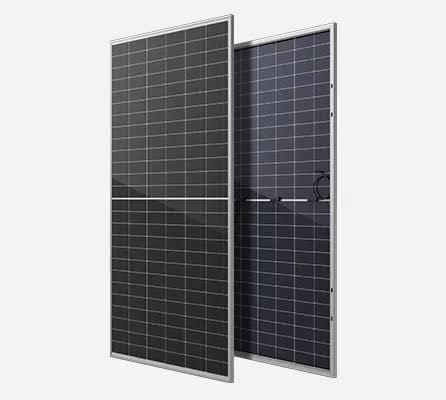
For years, solar panels were built around one simple idea: point the surface at the sun and let the cells inside turn light into electricity. But manufacturers have kept looking for ways to squeeze more energy out of every square meter. One result is the bifacial solar panel, a panel that generates power not only from its front side, but from its back side as well.
Meanwhile, monofacial panels, which only capture light on the front, are still the go-to choice for many installations. The bifacial vs monofacial question isn’t about which one is more modern. It’s about which one better fits your site, your mounting setup, and your energy goals. This article walks through the practical differences between the two.
What Is a Bifacial Solar Panel?
A bifacial solar panel is a panel whose cells can absorb light from both surfaces. The front receives direct sunlight just like a standard panel, while the back, usually made of glass or a transparent layer, picks up light reflected from the surfaces below and around it, such as concrete, gravel, light-colored roofing, or the ground.
The energy from the rear side is a bonus on top of what the front produces. How much extra power you get isn’t fixed, since it depends on several factors:
- Reflectivity (albedo) of the surface below the panel. White or light-colored surfaces reflect much more light than dark soil or grass.
- Distance between the panel and the surface. The higher the panel is mounted, the larger the reflective area its rear side can reach.
- Tilt angle. The right tilt leaves room for reflected light to reach the back of the panel.
- Mounting structure design. Rails or frames that run directly behind the cells can cast shadows and cut rear-side output.
- Bifaciality factor. This is the ratio of rear-side efficiency to front-side efficiency, typically around 70–90% depending on the cell technology.
What Is a Monofacial Solar Panel?
A monofacial solar panel is the conventional type that only produces electricity from its front side. The back is covered by an opaque protective layer called a backsheet, so any light hitting the rear goes unused.
Sunlight passes through the front glass, is absorbed by the solar cells, and is converted into DC electricity, which the inverter then converts for use. Because the design is mature and mass-produced, monofacial panels are known for being lightweight, easy to install, and available in a wide range of capacities. They suit most residential rooftop solar systems, especially when the panels are mounted flush against the roof.
Bifacial vs Monofacial Solar Panels: What’s the Difference?
Here are the key points of comparison between bifacial vs monofacial solar panels:
Number of light-capturing sides. Bifacial panels work from both sides, while monofacial panels only work from one. This basic difference shapes how each type behaves and how it should be installed.
Energy yield and efficiency. Front-side efficiency can be the same for both. However, bifacial panels can deliver roughly 5–30% more energy when the installation conditions are right. In less-than-ideal setups, the gain can be very small.
Physical design and mounting method. Many bifacial panels use glass on both sides (glass-glass), which makes them sturdier but also heavier. The junction box and frame are designed so they don’t block the cells on the back.
Space requirements and mounting structure. For the rear side to receive light, bifacial panels need clearance from the surface and a more open structure. Monofacial panels can be mounted tighter and closer to the roof without losing performance.
Investment cost and potential return. Bifacial panels usually cost slightly more, and the mounting structure may add to the bill. If the extra yield is significant, it can make up the price difference and shorten the payback period.
Pros and Cons of Bifacial vs Monofacial
Bifacial panels can produce extra electricity from the same installation area, especially when the rear side receives enough reflected light. Their glass-glass construction also makes them more resistant to moisture, and they generally degrade more slowly. On the downside, they need a suitable mounting design, they are heavier, and most of their advantage disappears when they are installed too close to a dark surface.
Monofacial panels are simpler, lighter, and can be more cost-effective for certain installations, particularly when the back of the panel gets little light. There is also a very wide choice of products and supporting components. The trade-off is that all of the power comes from the front, so there is no chance of gaining extra energy from reflected light.
Which One Is Right for Your Solar PV System?
When choosing between bifacial vs monofacial, consider the following:
- Residential rooftops with limited space. On tile or metal roofs, panels are usually mounted flush with little clearance, so the rear side receives almost no light. In this case, monofacial panels are usually all you need.
- Commercial and industrial PV systems. Concrete or large flat roofs leave room to mount panels at a specific tilt and height, which makes bifacial panels worth considering.
- Open-field or elevated installations. Ground-mounted arrays, solar carports, and canopies are ideal for bifacial panels because the rear side is fully exposed.
- Color and reflectivity of the surface below. White paint, light-colored roofing membranes, or pale gravel can boost reflected light, while dark surfaces reduce the benefit of bifacial panels.
- Upfront cost versus long-term energy yield. Compare the price difference with the projected extra energy over the system’s lifetime to see whether the additional investment pays off.
FAQ: Bifacial vs Monofacial Solar Panels
Do bifacial solar panels always produce more electricity?
Not always. The extra output only appears when the rear side receives enough reflected light. If the panels are mounted tightly over a dark surface, the result can be almost the same as a monofacial panel.
Are bifacial solar panels still effective when mounted close to the roof?
Less so. The closer the panel is to the roof, the less light reaches its rear side. The panel still works normally from the front, but the rear-side gain becomes minimal.
Are monofacial solar panels still worth using?
Absolutely. Monofacial panels remain an efficient and affordable choice for many rooftop solar systems, especially homes where the panels are mounted flush with the roof.
Do bifacial solar panels need special maintenance?
Maintenance is much the same as for standard panels: clean the front surface regularly. It also helps to keep the area beneath the panels clean and free of anything that blocks reflected light, and to check the rear side from time to time.
How do you calculate the potential benefit of bifacial panels?
Estimate the front-side output, then add the expected rear-side gain based on surface albedo, mounting height, tilt, and the panel’s bifaciality factor. For accurate figures, use solar PV simulation software, then compare the extra energy with the difference in investment cost.
Choosing between bifacial vs monofacial solar panels comes down to site conditions, mounting design, energy needs, and budget. Bifacial solar panels shine brightest in open installations with a reflective surface underneath, while monofacial panels remain a practical choice for most home rooftops. A thorough look at the expected energy yield and the overall system design will help you pick the right technology.
Need help figuring out which panel type makes the most sense for your site? ATW Solar is ready to be your partner for consultation, site surveys, energy yield simulations, and solar PV system planning tailored to your needs.