

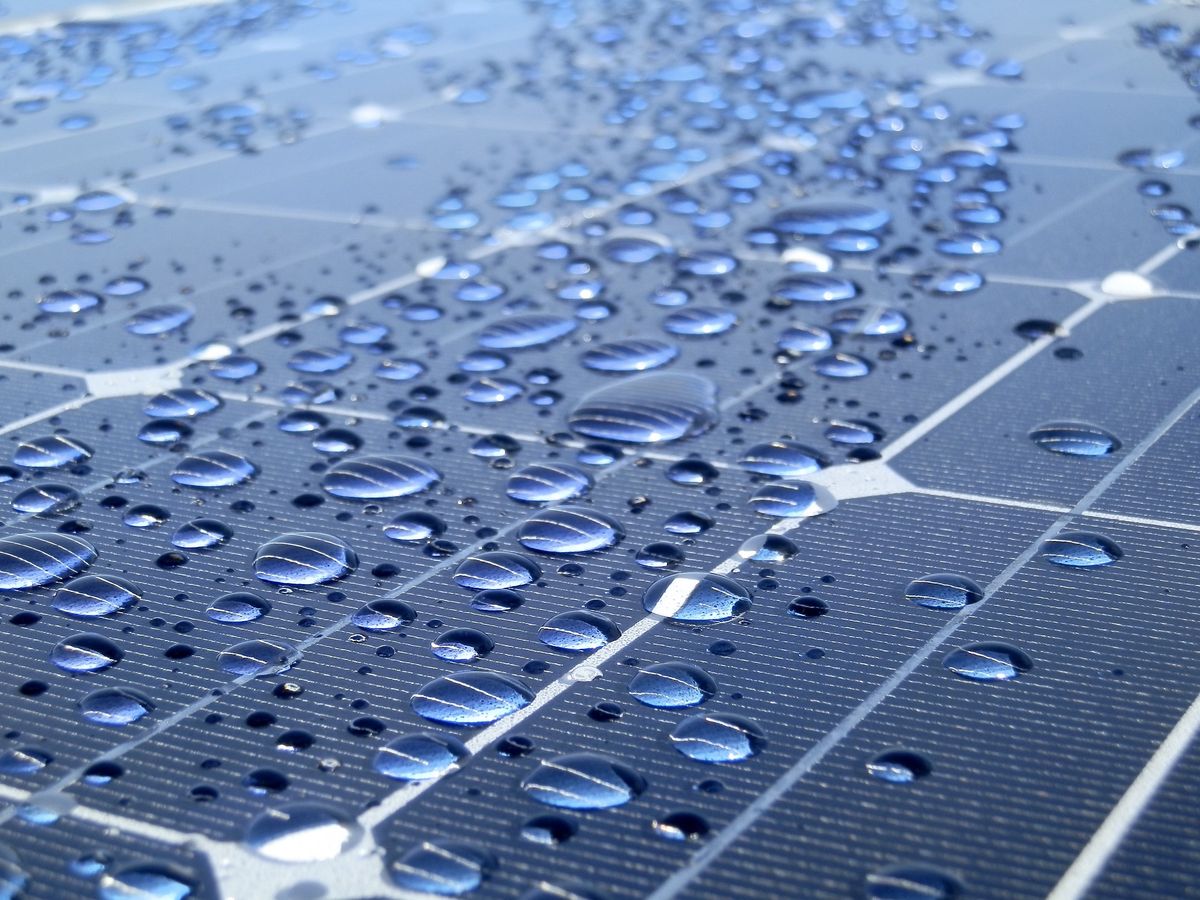
Many solar PV owners are caught off guard when the production figures in their monitoring app fall sharply as the rainy season sets in. It’s natural to wonder: is the solar panel output drop a sign of damage, or is it perfectly normal?
Simply put, a solar panel’s output depends heavily on how much sunlight reaches its surface. During the rainy season, skies are more often cloudy and overcast, so the energy produced goes down as well. This decline is usually temporary and doesn’t necessarily mean anything is wrong with your panels.
Why Does Solar Panel Output Fall During the Rainy Season?
There are a few main reasons why solar panels in the rain produce less electricity than on clear days:
- Lower sunlight intensity. Solar panels turn light into electricity, so the weaker the light they receive, the less power they generate.
- Overcast, cloud-covered skies. Thick clouds block most direct sunlight, leaving the panels with only scattered (diffuse) light, which carries far less energy.
- Fewer hours of sunshine. During the rainy season, the number of effective sun hours per day tends to shrink, as clear spells are often short-lived.
- Heavy rain cuts down incoming light. In a downpour, dark clouds and water droplets in the air leave very little light to reach the panel surface.
Other Factors Behind a Drop in Output
Weather isn’t the only culprit. If output falls further than usual, these factors are also worth checking:
- Panels covered in dust, dirt, or leaves. Grime, moss, bird droppings, or leaves stuck to the surface can block light from reaching the solar cells.
- Shade from trees and buildings. Shading on even a small part of a panel can noticeably reduce the output of an entire string. Branches also grow quickly in the rainy season, so keep an eye on them.
- Less-than-ideal tilt and orientation. Panels mounted too flat or facing the wrong direction capture less light, and dirt is also more likely to build up on their surface.
- Inverter or system component faults. An inverter error, loose or water-affected connectors, and faulty cables can all prevent part of the energy from getting through.
- Age-related performance loss. Solar panel efficiency declines gradually over time. This is normal as long as it stays within the manufacturer’s specifications and warranty.
Do Solar Panels Still Produce Electricity in the Rain?
Yes. To understand the performance of solar panels in the rain, it helps to know that panels keep generating electricity as long as they receive light, including the diffuse light that filters through the clouds. The amount is simply lower than on a sunny day.
On clear days, panels receive direct sunlight, so output comes close to the system’s optimal capacity, especially around midday.
On overcast days, output drops considerably. Under light cloud, panels can still produce most of their normal power, but under heavy cloud, output can fall to just 10–25% of clear-sky levels.
During heavy rain, output hits its lowest point because very little light reaches the panels. That said, the cooler panel temperature actually helps cell efficiency, so output can climb back quickly once the clouds thin out.
This is why solar output can swing up and down throughout the day in the rainy season. Moving clouds, passing showers, and the changing position of the sun all make the production graph look uneven. For that reason, system performance is best judged by total daily or monthly output, not by a single reading.
How to Keep Your Solar Panels Performing at Their Best
You can’t control the weather, but there are a few steps you can take to keep your solar panels working at their best all year round:
- Clean the panel surface regularly. Rain does help rinse off dust, but stubborn dirt such as moss or bird droppings still needs to be cleaned off with clean water and a soft tool.
- Make sure nothing is shading the panels. Trim nearby branches regularly, especially since plants grow faster during the rainy season.
- Monitor your energy production. Track daily output through the app or inverter display so you know what normal looks like for your system.
- Check the inverter and supporting components. Make sure the inverter shows no errors, its ventilation isn’t blocked, and cables and connectors are dry and securely fastened.
- Have the system inspected if the drop seems unusual. Don’t wait too long if output stays low without a clear weather-related reason.
When Should a Drop in Output Be Checked?
Not every solar panel output drop is caused by the weather. Arrange an inspection right away if you notice any of these signs:
- Output stays low after the weather clears up, even though nothing has changed around the panels.
- The drop is sudden and significant, for example, output falls far below what it was on previous sunny days.
- Output differs noticeably between strings or panels, which may point to a dirty, shaded, or damaged panel in one of the strings.
- The inverter shows an error or alarm, such as a warning about insulation, voltage, or the grid connection.
- Monitoring shows below-normal system performance over an extended period compared with times of similar weather.
An inspection is best carried out by an experienced technician, so the cause of the drop can be pinpointed and dealt with safely.
FAQ: Solar Panel Output in the Rainy Season
Can rain damage solar panels?
No. Solar panels are designed for outdoor use and are built to withstand rain, with protective glass and a waterproof frame and junction box. What matters is the quality of the installation, including connectors, cables, and lightning protection, so the system stays safe throughout the rainy season.
How much does solar output drop during the rainy season?
It depends on your location, how cloudy it gets, and how long the rain lasts. On heavily overcast days, daily output can fall sharply compared with sunny days, and on a monthly basis, rainy-season production is generally lower than in the dry season. Your own system’s monitoring data is the best way to see the pattern.
Do solar panels still work when the sky is overcast?
Yes. Solar panels still generate electricity from the diffuse light behind the clouds, although the amount is smaller than on a clear day.
Does rain help clean solar panels?
Rain can wash away light dust from the panel surface, especially on panels mounted at a decent tilt. However, stubborn dirt such as bird droppings, moss, or mud deposits still needs to be cleaned off by hand.
How can I tell whether a drop is caused by the weather or a system fault?
Compare output on days with similar weather. If production stays low after the weather clears, there’s a clear difference between strings, or the inverter shows an error, there’s most likely a system problem that a technician should look at.
A drop in solar output during the rainy season is usually caused by less sunlight due to cloudy and rainy weather. However, if the solar panel output drop is drastic or unusual, the condition of the panels, shading, the inverter, and other system components should also be checked. Regular monitoring helps you keep track of your PV system’s performance and catch problems early.
Has your solar output dropped and you’re not sure whether it’s the weather or a system fault? The ATW Solar team is here to help, from performance checks and panel maintenance to a full inspection of your inverter and other PV components.