

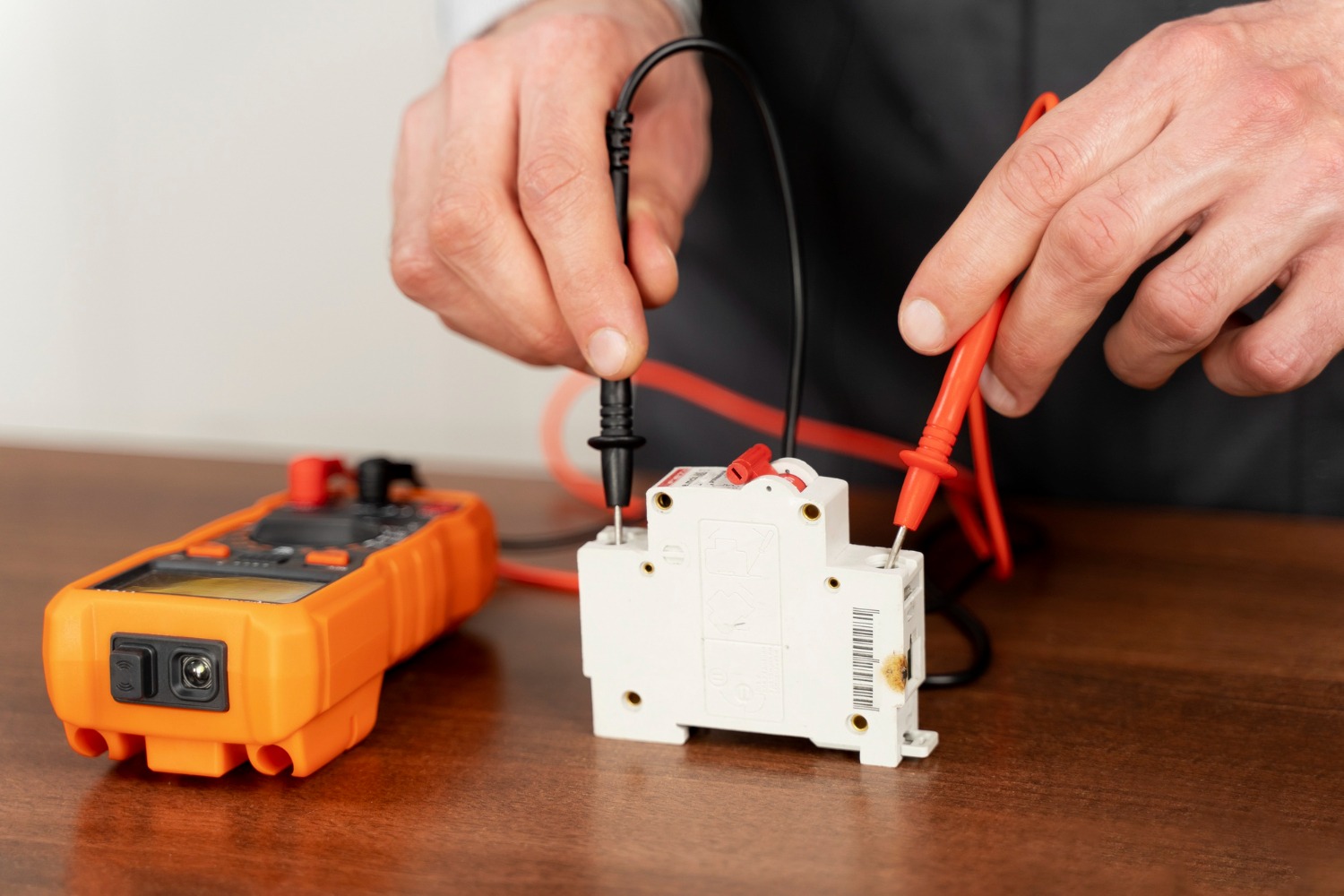
Have you ever been frustrated when your home’s electricity suddenly goes out while running the AC and washing machine at the same time? This usually happens because the installed electric capacity is not sufficient to handle multiple devices running simultaneously.
Numbers like 900 VA, 1,300 VA, or even 6,600 VA indicate the available electrical capacity in your home. The higher the VA, the more electronic devices can be used simultaneously without causing a power trip. Understanding electric VA is essential to match your home’s power capacity with your daily needs, especially if you often use high-power devices.
What Exactly Is Electric VA?
VA stands for Volt-Ampere, the unit used to indicate the available electrical capacity in a home or building. Technically, in electrical engineering, VA is known as apparent power, representing the amount of electricity that can be delivered by the power provider to a building’s electrical system.
Many people confuse VA with Watt, but they are different. Simply put:
- Watt: the actual power consumed by devices to operate.
- VA: the maximum capacity or “space” available to accommodate the total electrical load.
In simpler terms, VA determines the limit of how many devices can be used at the same time before the MCB automatically cuts off power due to overload.
Why Understanding Electric VA Matters in Daily Energy Use
Understanding electric VA is crucial for building owners because it directly affects daily comfort when using electricity.
For example, a home with a 900 VA capacity will struggle to operate high-power devices like ACs or water heaters simultaneously. If the total load exceeds the VA capacity, the electricity may suddenly go out, and devices could be at risk of damage.
According to the Ministry of Energy and Mineral Resources Regulation No. 7 of 2024, electricity tariff groups are determined by the connected power capacity (VA). This means the VA capacity you select affects the fixed monthly costs, such as base charges or minimum bills. However, the final total bill still depends on the amount of energy consumed (kWh).
How to Determine the Right Electric VA Capacity for Your Needs
Before deciding to upgrade your electricity, it’s important to evaluate your power requirements thoroughly to ensure the chosen capacity fits your needs. Consider the following:
- Identify Peak Loads
Devices with motors, such as water pumps, refrigerators, ACs, or production machines, typically require higher starting power when first turned on. Make sure this surge is considered to prevent sudden power trips when multiple devices run at the same time.
- Audit Your Electronic Devices
Make a list of all electronic devices in use and calculate their total power requirements (Watt). This will help you determine whether your installed VA capacity is sufficient or approaching its limit. For a more detailed guide, refer to How to Calculate and Determine Electric Power.
- Plan for the Future
If you plan to add devices such as ACs, water heaters, electric ovens, or additional production machines in the near future, adjust your VA capacity in advance. Proper planning ensures stable electricity use and prevents unexpected power trips or additional costs for capacity upgrades later.
Integrating Electric VA with Solar PV Systems
If you are considering renewable energy for long-term efficiency, electric VA capacity is an essential factor. Solar panels installed on your roof must be matched with your existing electricity capacity from PLN to ensure optimal performance and avoid technical issues.
This also depends on your building’s electrical installation type, whether single-phase or three-phase, which requires different inverter configurations. With careful planning, the electricity generated by solar panels can be safely and efficiently synchronized with your building’s electrical system.
Understanding electric VA allows you to know your building’s power limits, making the use of electronic devices safer, more stable, and better planned, without the risk of frequent power outages.
If you want to start switching to solar energy, ATW Solar can help design a solar panel system tailored to your electrical capacity, whether for residential or business needs. Proper planning ensures optimal performance and safe installation.
Interested in calculating your potential savings? Consult ATW Solar to assess your power needs and solar panel installation plan for the best solution!