

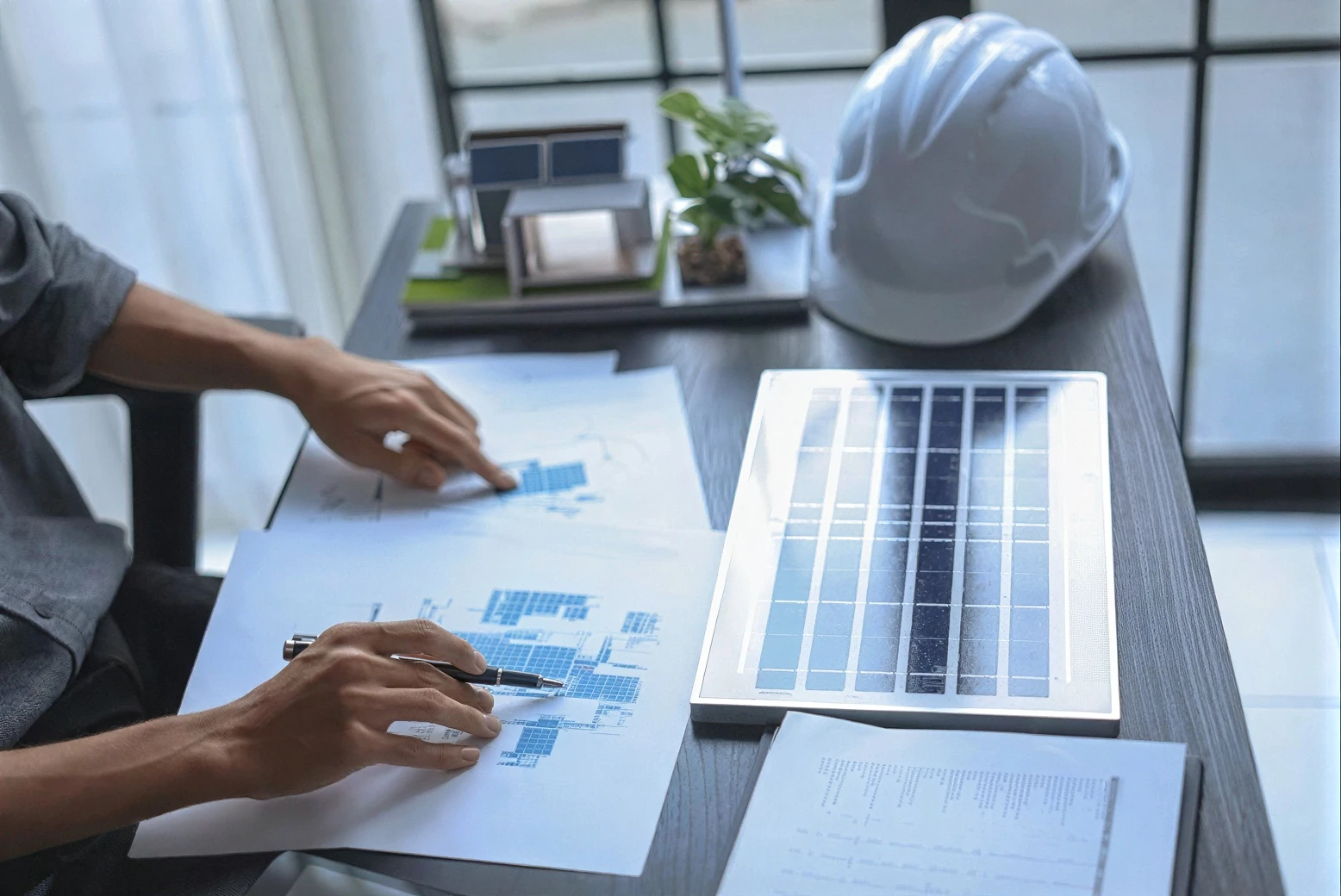
Before solar panels are installed, the solar power system design process needs to be carefully planned. Proper planning provides the foundation for determining how the system will operate, from system capacity and component selection to solar panel placement.
A well-designed solar panel system helps improve energy production efficiency, maintain installation safety, and support long-term system performance. In addition, a solar power system design that aligns with site conditions and electricity consumption needs can help optimize the value of a solar energy investment.
Every decision made during the design stage can affect system performance. Therefore, a solar power installation should not focus solely on the number of panels installed but also on the overall quality of the solar power system design.
What Is Solar Power System Design?
In general, solar power system design is the technical planning process for a solar power system before construction and installation begin. This process includes analyzing energy requirements and site conditions, determining system capacity, configuring components, and estimating electricity production.
The main purpose of solar panel system design is to develop a system that meets the user’s needs and the building’s conditions. Each project requires a different approach because electricity consumption, available area, building structure, and environmental conditions may vary.
Therefore, solar panel system design for residential properties, commercial buildings, and industrial facilities needs to be tailored to the requirements of each project.
Solar Panel System Design Stages
1. Energy Needs Analysis
The first stage is to analyze electricity consumption and usage patterns. This data provides the basis for determining the appropriate solar power system capacity and estimating how much of the generated energy can be utilized.
2. Site Survey
A site survey is conducted to assess installation conditions, such as the available roof or land area, building orientation, structural conditions, and potential obstructions around the site. This stage is important for determining whether the location is suitable for a solar power installation.
3. System Capacity Calculation
Based on the results of the energy needs analysis and site survey, the required system capacity is calculated. This calculation considers electricity demand, available installation area, and the potential energy production of the solar panels.
4. Solar Panel Layout Planning
Once the system capacity has been determined, the solar panels are arranged in a layout that suits the available area. Panel placement should consider optimal use of space, spacing between panels, maintenance access, and potential shading.
5. Energy Production Simulation
The next stage involves conducting a simulation to estimate the amount of energy the system can produce. This simulation provides an overview of the potential performance of the solar power system and the amount of energy it may generate over a specific period.
Solar Power System Construction Design
In addition to electrical planning, solar power system construction design plays an important role in ensuring that the installation can be carried out safely and securely. This planning includes the mounting structure, installation method, and adjustments based on the roof type or site conditions.
In solar power system construction design, the placement of inverters and electrical components also needs to be planned from the beginning to ensure easy access for operation and maintenance. Space requirements and component layouts should be considered during the system design stage.
Roof loads, wind conditions, weather, and the surrounding environment are also key considerations. Therefore, solar power system construction design needs to be adapted to the characteristics of the building and project conditions to support system safety and reliability.
Factors That Affect Solar Power System Design
1. Available Installation Area
The available area determines how many solar panels can be installed. The larger the usable area, the greater the potential system capacity that can be designed, while still taking energy requirements and site conditions into account.
2. Panel Orientation and Tilt Angle
The orientation and tilt angle of solar panels affect the amount of sunlight they receive. Determining the appropriate position can help optimize the system’s energy production potential.
3. Shading Potential
Shadows from trees, buildings, or other objects around the site can reduce solar panel energy production. Therefore, a shading analysis is needed to design the panel layout in a way that minimizes its impact on system performance.
4. Types of Solar Panels and Inverters
Each type of solar panel and inverter has different specifications and characteristics. Component selection needs to be tailored to project requirements, as it can affect system configuration, capacity, and overall solar power system performance.
5. Electricity Consumption Requirements
Electricity consumption patterns and levels are among the main factors in determining system capacity. By understanding energy requirements, the solar power system design can be adjusted to ensure that the energy generated is utilized more effectively.
Why Use EPC Services for Solar Power System Design?
Using EPC services can make the solar power system design process more integrated because planning, procurement, and construction are handled as part of a single project process. This approach can help reduce the risk of inconsistencies between the design stage and the actual installation.
ATW Solar provides integrated solar energy solutions covering system design, component procurement, and project management to help deliver systems that meet customer requirements.
With support from experienced professionals, the solar power system construction design and overall system planning can be developed from the beginning to help ensure optimal system performance.
Solar power system design is a fundamental part of a successful solar energy project. Proper planning can help improve efficiency, maintain safety, and maximize long-term investment value.
From energy consumption analysis to solar power system construction design, every stage plays an important role in overall system performance. By working with an experienced EPC provider such as ATW Solar, a solar power project can be designed and built according to the project’s requirements and site conditions.
FAQ
How long does the solar power system design process take before installation begins?
The duration of the solar power system design process depends on the scale and complexity of the project. It may include data analysis, site surveys, technical calculations, and document preparation before installation begins.
Can a solar power system design be modified if electricity demand increases in the future?
Yes. A system can be designed with potential future expansion in mind. However, any additional capacity still needs to be evaluated based on the technical condition and capabilities of the existing system.
What software is commonly used to design solar power systems?
The software used may include tools for energy production simulation, shading analysis, and layout design. One example is PVsyst, which can be used for system design simulation and analysis.
Do all types of roofs require different construction designs?
Not necessarily entirely different, but each roof type has structural characteristics and installation methods that need to be considered in the solar power system construction design.
What documents are typically produced during the solar power system design stage?
The documents may include system layouts, single-line diagrams, technical calculations, energy production estimates, bills of materials, and other supporting drawings or documents.