

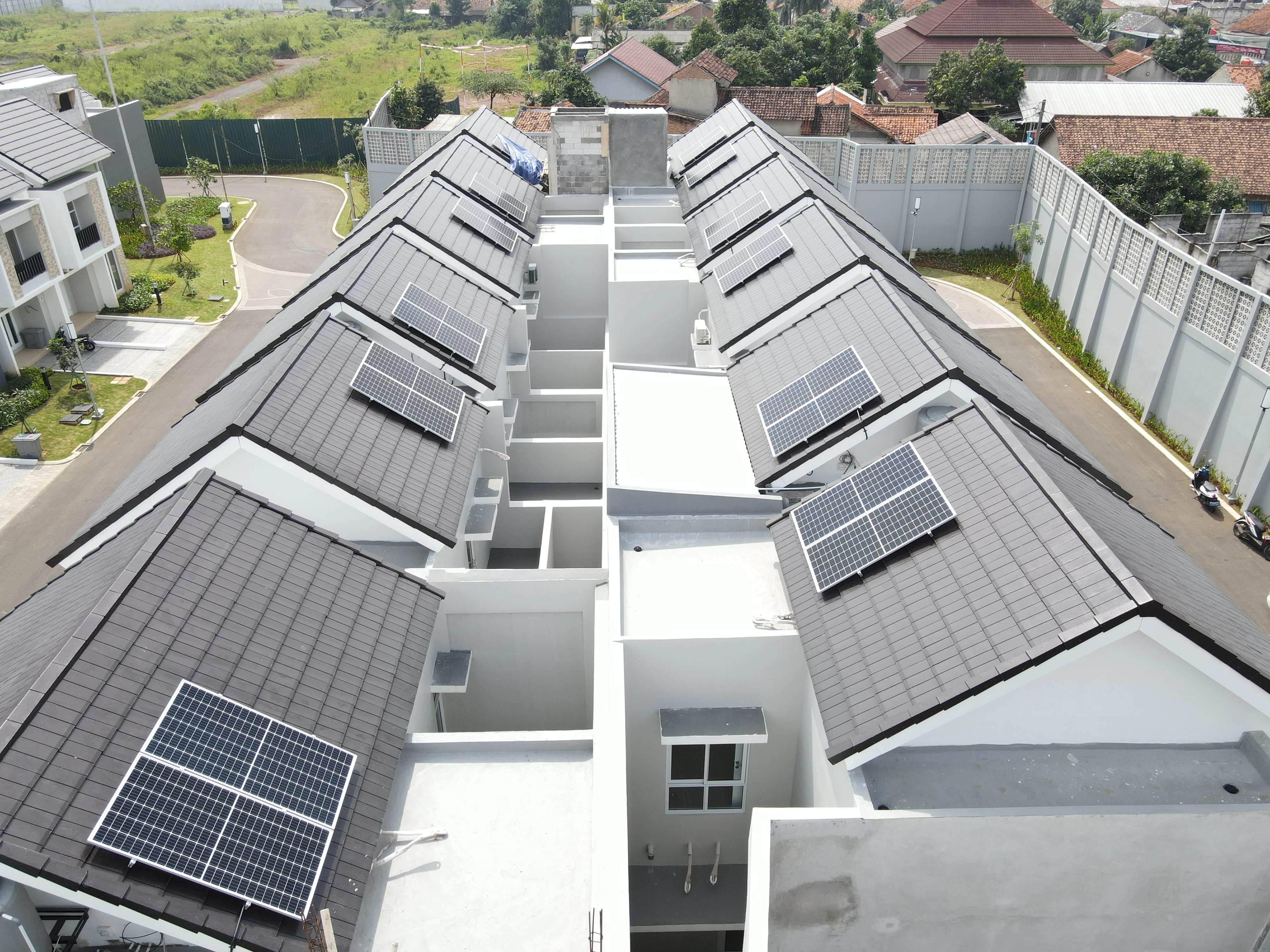
Rising energy demand and growing attention to sustainability have made solar panel investment increasingly attractive for businesses and industries. Through a solar power system, companies can generate a portion of their own electricity needs and reduce their dependence on grid electricity.
In the long term, this investment can help companies manage their energy costs. A solar power system can also serve as a long-term energy asset that supports operational efficiency strategies while contributing to corporate sustainability goals.
What Is Solar Panel Investment?
Simply put, a solar panel investment refers to the allocation of funds to build a solar power system that utilizes sunlight as a source of electricity generation. This investment can be suitable for homes, businesses, commercial buildings, and industrial facilities with relatively high electricity consumption and sufficient installation space.
Unlike conventional investments that generate returns in the form of interest or dividends, a solar power system creates value through electricity cost savings. Therefore, a solar panel investment should be evaluated based on energy consumption, electricity generation potential, investment costs, and the expected payback period.
Benefits of Investing in Solar Panel Installation
Here are some of the benefits of investing in solar panel installation for residential, business, and industrial applications:
- Reducing electricity bills
The energy generated by a solar power system can be used to meet a portion of electricity demand while the system is producing power. - Helping control energy costs
Companies can reduce their exposure to potential changes in electricity costs in the future. - Supporting ESG targets
The use of renewable energy can support corporate sustainability strategies and carbon emission reduction targets. - Increasing asset value
A well-designed solar power system can become a value-added energy infrastructure asset for a company. In residential applications, solar panel installation may also increase the value of a property.
How Is Solar Panel Investment Calculated?
Solar panel investment calculations generally begin with estimating the initial investment costs, including solar panels, inverters, mounting structures, installation, and other supporting components. Next, the estimated electricity production is calculated based on system capacity, location, solar irradiation, panel orientation, and potential shading.
Based on the estimated electricity production, companies can calculate potential electricity cost savings. Simply put, the greater the portion of solar energy that can be directly used to meet operational electricity needs, the greater the potential economic benefits. Regulations should also be considered, as rooftop solar mechanisms in Indonesia have undergone changes, including the removal of the excess energy export-import mechanism.
Furthermore, solar panel investment calculations can use indicators such as ROI and payback period. The payback period is used to estimate how long it will take for the savings generated by the solar power system to offset the initial investment cost. Meanwhile, ROI helps measure the rate of return on the investment over a specific period.
Factors That Affect Solar Panel Investment Value
Several factors can influence the results of a solar panel investment, including:
- Electricity Consumption
Electricity consumption patterns and volumes are among the key factors in determining the value of a solar panel investment. A solar power system can provide more optimal benefits when the electricity it generates can be directly used to meet operational needs.
Therefore, companies should analyze their electricity consumption profile, particularly their daytime energy usage when solar panels are generating electricity. The better the alignment between solar power generation and electricity consumption patterns, the greater the potential cost savings. - Solar Power System Capacity
The capacity of a solar power system should be adjusted according to electricity needs and the conditions of the installation site. A system that is too small may not provide maximum savings, while a system that is too large may generate energy that cannot be utilized optimally.
For this reason, determining the appropriate system capacity is an important part of solar panel investment calculations to ensure that the investment cost is aligned with the potential benefits and savings generated. - Installation Location
The installation location affects the amount of energy that can be generated by a solar power system. Factors such as solar irradiation, panel orientation and tilt, ambient temperature, and shading from buildings or other objects can affect system performance.
The condition of the roof or installation area should also be considered. The available space will determine how many panels can be installed, while the structural condition must be assessed to ensure it can support the solar power system over the long term. - Solar Panel and Inverter Quality
Selecting high-quality components can affect the performance and lifespan of a solar power system. Highly efficient solar panels can generate more energy within a limited area, while inverters play an essential role in converting electricity from the panels into usable electricity.
Higher-quality components may require a greater initial investment, but they can help maintain system performance and reliability over the long term. This is an important consideration for achieving optimal returns from solar panel installation investment. - System Design and Installation Quality
System design does not only determine the number of panels installed. It also includes panel placement, component selection, system configuration, and integration with a company’s electricity requirements.
An experienced EPC provider such as ATW Solar can conduct technical analysis and develop a system design that is better suited to project conditions. With proper planning, the system can be designed to generate energy optimally while helping maximize the long-term value of a solar panel investment.
Tips to Maximize Your Solar Panel Investment
To achieve optimal returns from solar panel installation investment, companies should conduct an energy audit beforehand. Electricity consumption data and load profiles can help determine the most appropriate system capacity.
In addition, it is important to use high-quality components and ensure that the system is professionally designed. Working with an experienced EPC provider such as ATW Solar can help companies throughout the process, from needs analysis and system planning to procurement and installation, while ensuring that the solar power system is designed according to the specific conditions and requirements of the project.
Conclusion
A solar panel investment offers both economic and environmental benefits through electricity cost savings and the use of cleaner energy. However, the results of each project may vary. Therefore, accurate solar panel investment calculations, appropriate system sizing, and professional design and installation are essential to achieving an optimal ROI.
FAQ
How long is the payback period for a solar panel investment?
The payback period for a solar panel investment can vary from one project to another, depending on several factors, including the initial investment cost, electricity tariffs, energy consumption levels, system capacity, and the amount of electricity generated.
Is solar panel investment suitable for small businesses?
Yes, as long as the system capacity and electricity consumption patterns are suitable. An energy needs analysis is required to assess its feasibility.
Are solar panel maintenance costs expensive?
In general, solar power systems require relatively low maintenance. However, regular inspections and maintenance are still necessary to maintain optimal system performance.
How do I calculate the required solar power system capacity before investing?
The calculation involves analyzing electricity consumption, load profiles, available installation area, and potential energy production.
Does the installation location affect the value of a solar panel investment?
Yes. The location affects solar irradiation potential, temperature, panel orientation, tilt, and shading risks, all of which can influence electricity generation.