

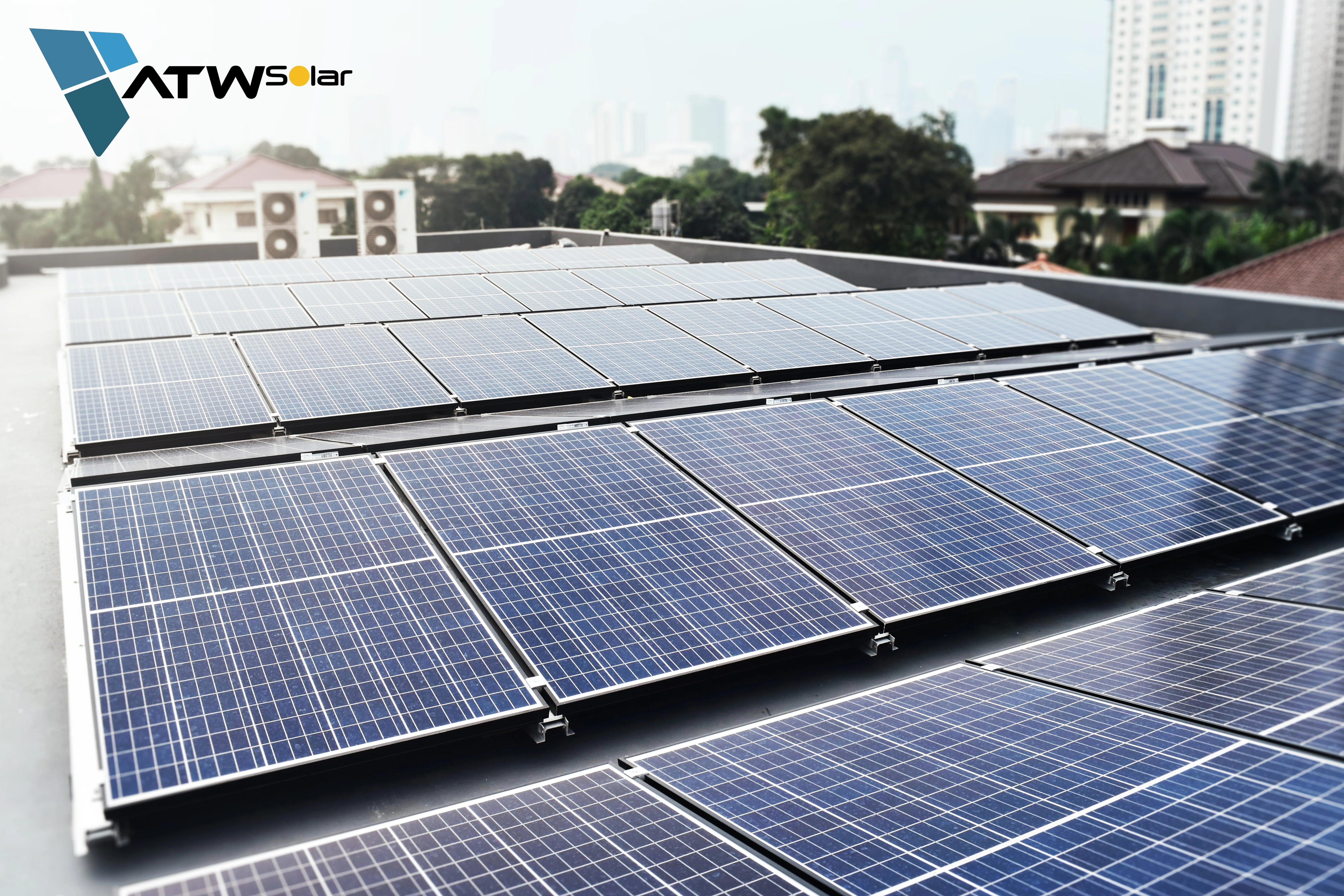
The use of Rooftop Solar Power Plants (PLTS) is increasingly growing, especially in commercial and industrial buildings. Companies are beginning to switch to solar energy due to the need to improve energy efficiency, control electricity costs, and support sustainability commitments. One of the widely adopted solutions is the building’s photovoltaic rooftop solar system, which allows the roof area to be utilized to generate electricity.
Besides being a renewable energy source, the use of solar panels can also be part of a company’s ESG (Environmental, Social, and Governance) strategy. So, what are the benefits of solar panels on building roofs, how does the system work, and what is the licensing process for building solar panels on buildings?
What is a Building Photovoltaic Rooftop Solar System?
A building photovoltaic rooftop solar system is a power generation system that uses photovoltaic panels or modules to convert sunlight into electrical energy. Its main components consist of solar panels, inverters, mountings, cables, protection devices, and monitoring systems.
The rooftop photovoltaic (PV) system works by capturing solar energy through solar panels and converting it into DC electricity. An inverter then converts the electricity into AC so it can be used for the building’s operational needs. The system can be designed according to the building’s conditions and electricity consumption requirements.
Benefits of Solar Panels on Building Roofs
- Reducing electricity costs.
Solar energy can be used to meet part of a building’s electricity needs, especially during the daytime. For companies with high electricity consumption during operating hours, utilizing the energy generated by a solar PV system can help reduce reliance on electricity from the grid. The potential savings, however, depend on factors such as system capacity, consumption patterns, and project conditions. - Making use of unused rooftop space.
The roofs of office buildings, factories, and warehouses can be utilized to generate electricity without requiring additional land. This is one of the key advantages of rooftop solar PV systems, as companies can optimize existing space without changing the building’s primary function. - Reducing carbon emissions.
The use of solar energy helps companies reduce their dependence on conventional energy sources. In addition to providing environmental benefits, this approach can also support efforts to achieve corporate emission reduction targets. - Supporting corporate ESG targets.
Solar PV systems can serve as a tangible demonstration of a company’s commitment to energy efficiency and sustainability. Implementing solar energy can also support ESG reporting and initiatives that require concrete actions to manage environmental impacts. - Increasing building asset value.
Renewable energy infrastructure can add value to commercial and industrial buildings. Buildings equipped with more efficient energy systems may also be more attractive to companies or tenants that consider sustainability in their decision-making.
What Types of Buildings are Suitable for Rooftop Solar Panels?
Solar panels can be applied to various types of buildings. Office buildings can utilize them for electricity needs during working hours. Factories and industrial estates have great opportunities because of their high electricity consumption. Warehouses and distribution centers generally have large roof areas, while hotels, hospitals, and shopping centers have continuous energy needs.
However, the benefits of rooftop solar panels still depend on the conditions and needs of each building. An analysis of electricity consumption and roof conditions is required before determining the system.
Licensing for Building Solar Panels on Buildings
The licensing aspect of building solar panels on buildings needs to be considered from the start. In Indonesia, current rooftop solar panel regulations refer to the Ministry of Energy and Mineral Resources (ESDM) Regulation Number 2 of 2024, which replaces ESDM Regulation Number 26 of 2021. The regulation governs capacity, quotas, applications, as well as the construction and installation of Rooftop Solar Panels.
In the licensing process for building solar panels, the installation application needs to be carried out according to the applicable mechanism before the system is built and installed. Companies also need to prepare technical data, system designs, capacity information, and necessary supporting documents.
Things to Consider Before Installing Rooftop Solar Panels
Before installation, the condition and structure of the roof must be inspected to ensure installation safety. Electricity consumption needs also must be analyzed so that the system’s capacity matches the building’s load profile.
Choosing the right capacity will help optimize investment and energy production. Therefore, choosing an experienced EPC (Engineering, Procurement, and Construction) provider like ATW Solar can help the process of planning, designing, installing, and testing the system to fit your needs. ATW Solar provides solar panel solutions for the commercial and industrial sectors with high-quality components and experienced experts.
Rooftop Solar Panels can be an efficient solution for commercial and industrial buildings. By understanding the benefits of rooftop solar panels, choosing the appropriate building photovoltaic rooftop solar system, and properly preparing the licensing for building solar panels, companies can maximize their investment benefits.
Careful planning, design, and licensing will help ensure the system meets the building’s needs. Partnering with an experienced solar panel provider like ATW Solar can also help ensure the installation process and system performance run optimally.
FAQ
What is the ideal rooftop solar panel capacity for a building?
There is no one-size-fits-all capacity for all buildings. The ideal capacity needs to be adjusted to electricity consumption, load profile, roof area, structural condition, and potential energy production. Therefore, analyzing electricity usage beforehand is important so that the system capacity is neither too small nor excessive.
How long is the installation process for solar panels on a building until it is ready to operate?
The installation duration varies for each project as it is influenced by the system scale, roof conditions, design complexity, component availability, installation process, and required approvals. Commercial or industrial building projects usually require more detailed planning compared to small-scale installations.
Can older roof structures be fitted with solar panels?
Yes, as long as the roof structure still meets the technical requirements and is able to support the system’s additional load. A structural inspection must be conducted prior to installation to ensure safety aspects as well as identify any roof repair needs.
Do rooftop solar panels require special annual maintenance?
Solar panels still require periodic maintenance to maintain their performance. Cleaning panels, inspecting cables and mountings, checking inverters, and monitoring energy production can help detect issues early and keep the system operating optimally.
How do you calculate potential electricity savings after installing solar panels on a building?
Calculations can be made by comparing the building’s electricity consumption with the estimated energy production of the solar panels. Data such as system capacity, load profile, energy production, and electricity tariffs need to be taken into account to get a more accurate picture of potential savings and investment feasibility.