

Electricity demand in Indonesia continues to grow alongside industrial expansion, business development, and rising daily energy use. This steady increase highlights an important challenge. The power system must not only keep up with demand, but also be supported by clear and well-structured long-term planning.
Without careful planning, gaps between supply and demand can emerge, leading to uneven distribution and inefficient infrastructure development. In a system as large and complex as Indonesia’s, these risks can directly affect both economic activity and public access to electricity. To manage this, a structured and measurable framework is essential.
This is where RUPTL plays a defining role.
What Is RUPTL?
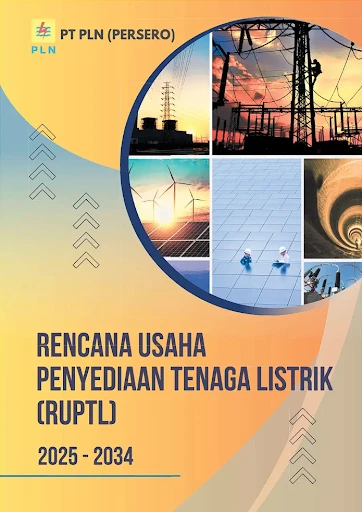
RUPTL, or Rencana Usaha Penyediaan Tenaga Listrik, is a 10-year strategic plan prepared by PLN and approved by the government.
It serves as the primary reference for national electricity development, covering power generation, transmission and distribution networks, demand projections, and long-term investment planning. Through RUPTL, electricity supply is not developed in isolation, but aligned with projected needs and national priorities.
This allows the government to ensure that electricity remains sufficient, stable, and cost-efficient, while still supporting broader goals such as efficiency and sustainability
The Role of RUPTL in the Power Sector
RUPTL provides direction for how electricity infrastructure is developed and distributed across Indonesia. It plays a key role in improving access, particularly in regions that have not yet been fully served.
At the same time, RUPTL ensures that electricity supply grows in line with economic activity. As industries expand and new business centers emerge, infrastructure development can follow in a more coordinated and timely manner.
Equally important, RUPTL helps improve planning accuracy. By setting clear projections and priorities, it reduces the risk of overinvestment or supply shortages, both of which can create inefficiencies in the system.
Beyond system reliability, RUPTL also acts as a policy instrument that supports the transition to cleaner energy. It outlines how the share of renewable energy will increase within the national energy mix, making it an important foundation for reducing carbon emissions and supporting long-term sustainability targets.
RUPTL and Renewable Energy Development
Recent RUPTL policies place stronger emphasis on renewable energy as part of Indonesia’s long-term energy transition.
In the PLN RUPTL 2021 to 2030, more than 50 percent of planned additional power capacity is expected to come from renewable sources. This marks a meaningful shift from a system historically dependent on fossil fuels toward a more balanced and lower-emission energy mix.
One of the most practical implementations encouraged within RUPTL is rooftop solar, or PLTS Atap. Its flexibility allows it to be applied across residential, commercial, and industrial sectors without requiring large land areas.
This makes solar energy not only relevant, but increasingly strategic. It offers a way to reduce emissions while also helping users manage electricity costs more efficiently over time, especially as energy prices and demand continue to evolve.
The Impact of RUPTL on Industry and Society
The impact of RUPTL can be seen in both public access and business operations.
For communities, it supports wider and more equitable access to electricity, helping improve reliability in areas that previously faced limitations. This contributes directly to regional development and overall quality of life.
For businesses, RUPTL provides greater certainty in electricity availability. A more stable supply allows operations to run more efficiently and reduces the risk of disruption that could affect productivity.
At the same time, the increasing share of renewable energy within RUPTL creates a practical opportunity for businesses to begin transitioning toward cleaner and more cost-efficient energy sources as part of their long-term strategy.
ATW Solar’s Role in Supporting RUPTL Implementation
As renewable energy becomes more prominent within RUPTL, the role of the private sector becomes increasingly important in turning these plans into real implementation.
ATW Solar supports this transition by providing rooftop solar solutions tailored to both businesses and households. The approach is structured, starting from energy analysis and system design to estimating potential savings, followed by installation and licensing support.
With this approach, adopting solar energy becomes more accessible and aligned with actual needs. It not only helps reduce electricity costs, but also represents a practical step in supporting the broader energy transition outlined in RUPTL.
RUPTL and the Future of Energy in Indonesia
RUPTL provides a clear direction for how Indonesia’s electricity sector is developed, ensuring that supply remains stable while supporting the shift toward renewable energy.
As solar energy becomes more integrated within RUPTL, this creates a timely opportunity for businesses and households to adapt. With the right approach, transitioning to solar energy can deliver both operational efficiency and long-term sustainability.
For those considering rooftop solar, understanding how the system can be tailored to specific needs, along with the potential savings it offers, is an important first step. ATW Solar can support this process through consultation and analysis designed to provide clear and actionable insights.